
African Political Thought · Unit 8
The Ethnophilosophy Debate
A Belgian missionary claimed to discover African philosophy in 1945, and African philosophers have argued about whether he actually did ever since
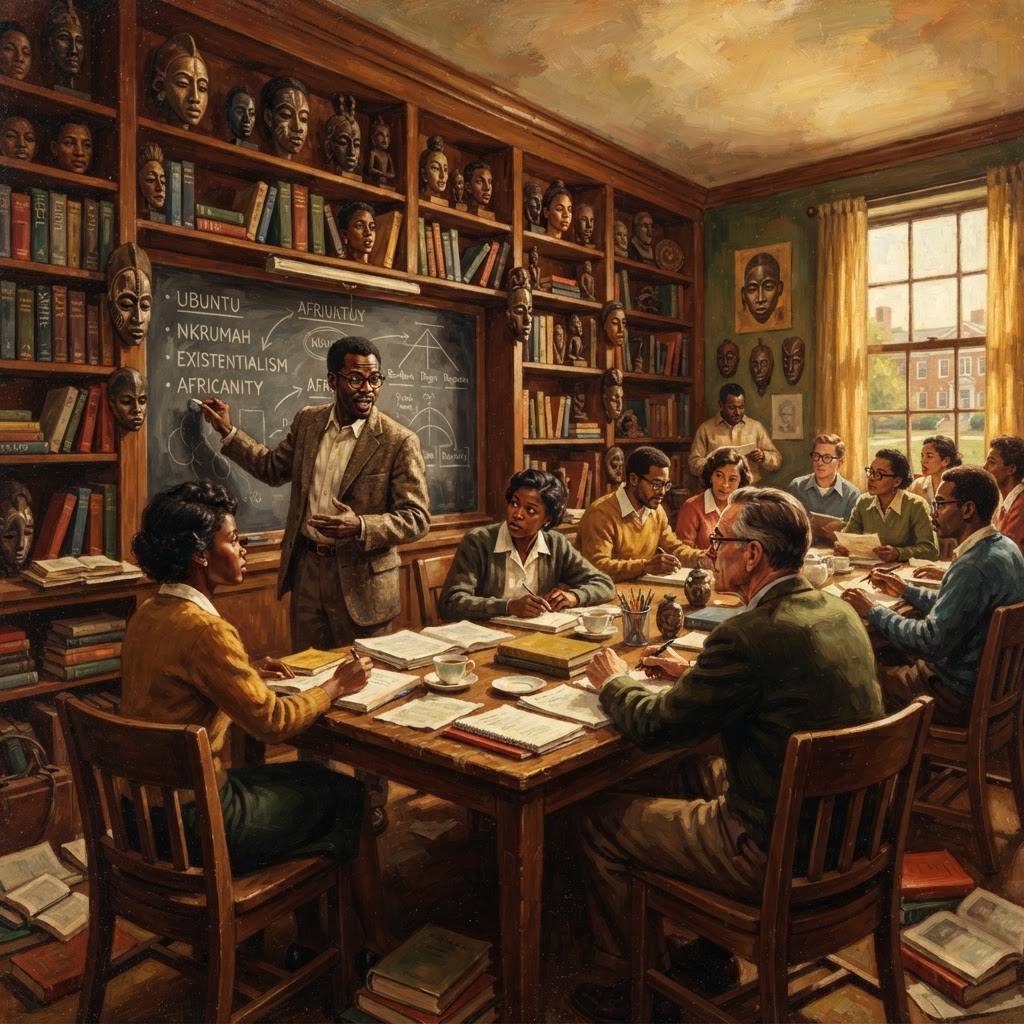
This unit examines a debate this course has previewed repeatedly, in its treatment of Ifa, Senghor, and Cabral alike: what actually counts as African philosophy? It traces the debate from its unlikely origin in a 1945 book by a Belgian Franciscan missionary, through Paulin Hountondji's forceful rejection of that entire approach as 'ethnophilosophy,' a mistaking of ethnography for philosophy, to the two most influential attempted resolutions, Kwasi Wiredu's conceptual decolonization and Henry Odera Oruka's sage philosophy, each proposing a different way past the original argument's apparent dead end.
Learning Objectives
- •Students will be able to explain Placide Tempels's 1945 Bantu Philosophy and evaluate the genuine irony of contemporary African philosophy's foundational text having been written by a Belgian colonial missionary.
- •Students will analyze Paulin Hountondji's critique of ethnophilosophy, including his specific charge that it reduces African thought to anonymous, collective ethnography rather than individually authored, falsifiable philosophical argument.
- •Students will evaluate the counter-critique that Hountondji's own strict definition of philosophy reflected his French academic training as much as any neutral universal standard, connecting this to the broader pattern of internal African intellectual debate this course has traced throughout.
- •Students will explain Kwasi Wiredu's conceptual decolonization and Henry Odera Oruka's sage philosophy as two distinct attempts to resolve the ethnophilosophy debate without fully endorsing either Tempels's original framework or Hountondji's narrow rejection of oral tradition.