
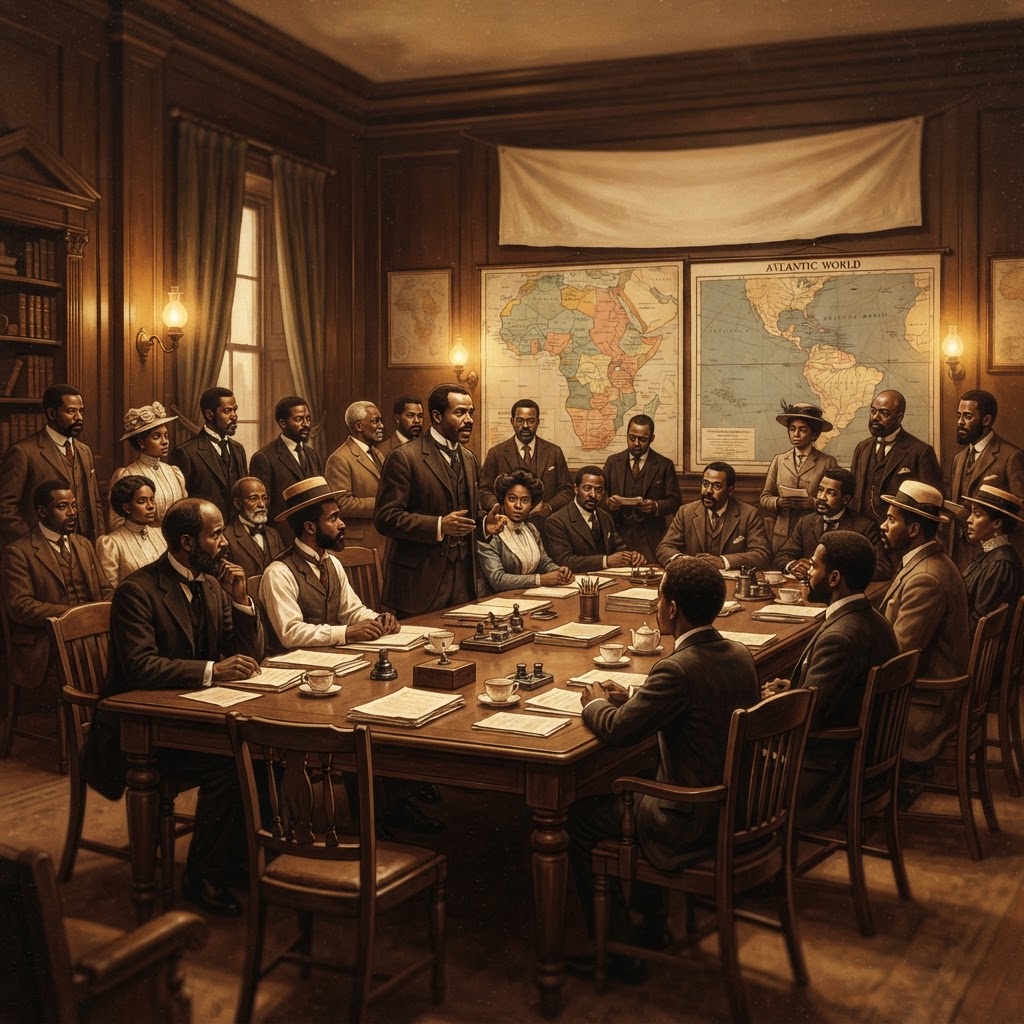
African Political Thought · Unit 2
Pan-Africanism as Political Thought
From a Liberian statesman's 'African Personality' to a Manchester congress hall that finally demanded independence, not petition
This unit traces Pan-Africanism as an evolving body of political thought, not simply a series of biographical events. It begins with Edward Blyden's nineteenth-century philosophy of African cultural self-worth, examines the genuine ideological differences and personal antagonism between W.E.B. Du Bois's elite-led congress diplomacy and Marcus Garvey's mass-based economic nationalism, and closes with the 1945 Manchester Congress, whose working-class attendance and demand for immediate independence marked a decisive break from Pan-Africanism's earlier, more cautious petitioning phase.
Learning Objectives
- •Students will be able to explain Edward Blyden's concept of 'African Personality' and evaluate his influence on the later Pan-African thinkers who built on his foundation.
- •Students will analyze the specific ideological, class-based, and personal disagreements between W.E.B. Du Bois and Marcus Garvey, distinguishing genuine philosophical differences from personal antagonism.
- •Students will evaluate why historians identify the 1945 Manchester Congress as a decisive turning point in Pan-African thought, distinguishing its working-class composition and explicit independence demand from the more limited petitioning aims of the four earlier congresses.
- •Students will trace how ideas articulated at Manchester directly shaped the independence movements later led by attendees including Kwame Nkrumah and Jomo Kenyatta.