
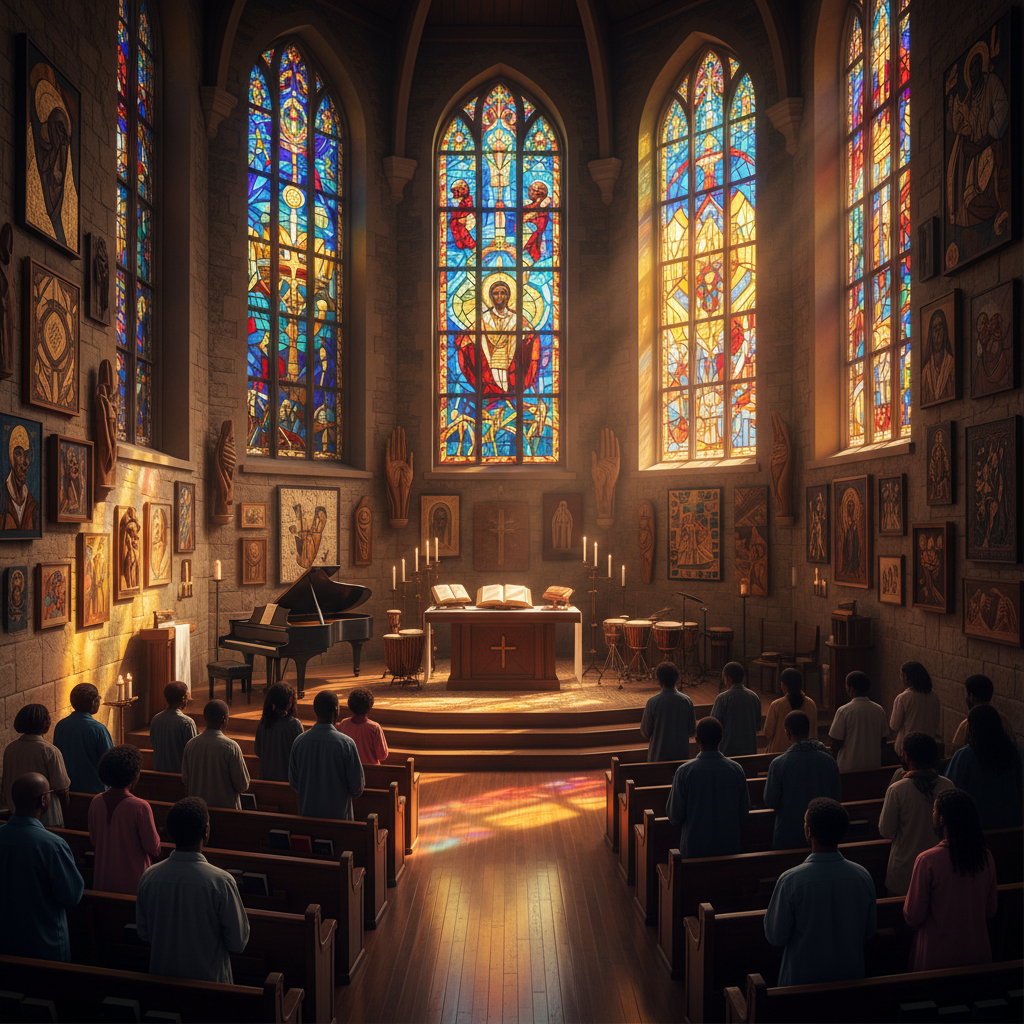
African American History · Unit 10
Faith, Thought & Cultural Creation
Unit 10 Knowledge Check
Score 70% or higher to complete this unit. Answers stay hidden until you submit.
1. The 'invisible institution' refers to which practice that African Americans maintained under slavery to preserve spiritual life?
2. How did the Black Church serve as more than a religious institution during and after slavery?
3. The Harlem Renaissance of the 1920s–30s is best understood as which of the following?
4. What does the concept of 'call and response' in African American musical and religious traditions trace back to?
5. Zora Neale Hurston's anthropological work collecting African American folklore was considered controversial by some Black intellectuals of her time. Why?
Institutions of Black Resistance and Expression
Document-Based Task · scored with the essay rubric
Analyze how the Black Church and the evolution of Black intellectual and cultural production functioned as vehicles for liberation and community building. Using the provided sources, synthesize the ways in which these diverse institutions challenged systemic exclusion and helped preserve a distinct African American historical record.
Source Documents
The Souls of Black Folk by W.E.B. Du Bois (1903), specifically Chapter X: Of the Faith of the Fathers
Primary SourceThe Black Church in the African American Experience by C. Eric Lincoln and Lawrence H. Mamiya
Secondary SourceCan't Stop Won't Stop: A History of the Hip-Hop Generation by Jeff Chang
Secondary Source