
African History · Unit 8
Cold War Africa
How a rivalry between two faraway superpowers turned newly independent African nations into battlegrounds
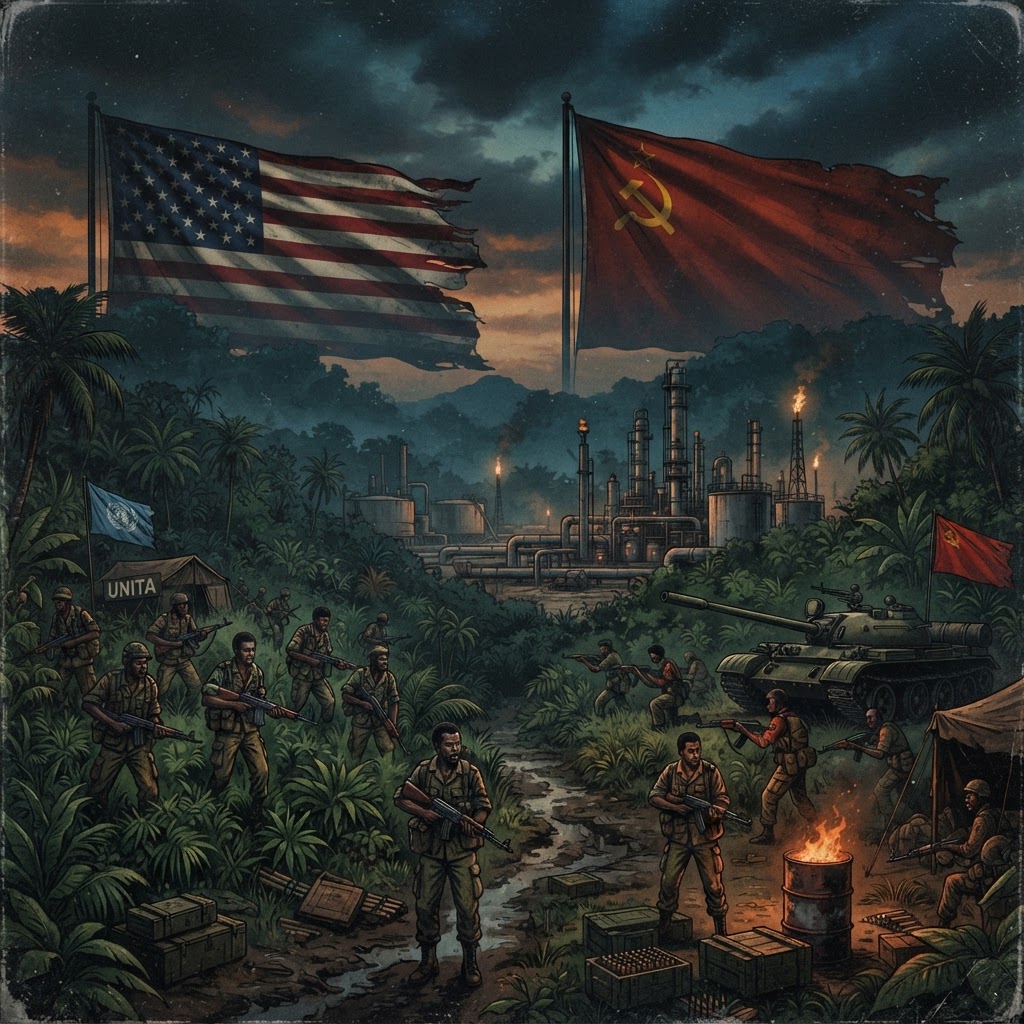
Independence did not remove African nations from great-power competition; it simply changed its form. This unit examines three moments when Cold War rivalry directly shaped African political outcomes: the assassination of Congo's first prime minister within six months of independence, a 27-year Angolan civil war fought substantially by Cuban and South African proxies, and a Horn of Africa war in which the Soviet Union abruptly abandoned one ally for its enemy in the middle of the fighting.
Learning Objectives
- •Students will be able to explain how superpower competition for global influence directly shaped the internal political outcomes of newly independent African nations, using specific documented evidence from the Congo, Angola, and the Horn of Africa.
- •Students will analyze declassified and testimonial evidence regarding Western involvement in Patrice Lumumba's assassination, evaluating what is documented fact versus what remains historically disputed.
- •Students will compare how ethnic and regional divisions, often rooted in colonial-era administrative choices examined earlier in this curriculum, became entangled with and were exploited by Cold War ideological competition in Angola and the Congo.
- •Students will evaluate the Ogaden War as evidence that Cold War alliances in Africa were often based on strategic calculation rather than fixed ideological commitment, tracing how the Soviet Union and Cuba abandoned one ally for its wartime enemy.